One of the most common questions I get at work—from nurses I respect, nurses who are solid clinicians, nurses who are honestly just trying to figure out their next move—is this:
“Where did you go to NP school?”
I tell them my alma mater (University of Pennsylvania School of Nursing, yes, I’m very proud). In addition, I share the program, the track, the path.
But then I always ask the question that matters more.
“Are you thinking about going back?”
And then I ask the follow-up that really makes the room quiet:
“What do you actually want to do with your degree?”
If you’re already wrestling with that question, I made a video about this over on my YouTube channel, The Nurse Sabbatical, and this is the deeper, written version of that conversation.
Almost every time, there’s a pause.
Not because nurses don’t have answers. They do.
They can tell me the names of every program in the state. The specialty tracks. The clinical hour requirements. The salary ranges. The job market. The “best” route. The “fastest” route.
But when it comes to the why—the pull—the thing that’s actually calling them forward?
That’s where they stumble.
And it’s not because they’re not smart or knowledgeable. It’s because nursing culture doesn’t always teach us to pause long enough to ask ourselves what we actually want.
I’ve been a nurse practitioner for almost seventeen years, and I’ve truly loved being an NP. Over the years, my skill set has allowed me to do so many things beyond the bedside.
However, I’m also honest about this: becoming an NP is not automatically the answer. And it’s definitely not something we should default into just because it’s trending.
So if you’re thinking about NP school right now, I want you to pause for a second—and ask yourself one simple question before you start looking at programs, tuition, and application deadlines:
Do I actually want the work?
Not the title.
Not the paycheck.
Not the escape route.
The work.
NP School Is Trending—But Is It Your Work?
Right now, becoming an NP is more popular than ever. It’s consistently listed as one of the fastest-growing roles in healthcare, and you can feel that energy everywhere.
Especially online.
If you’ve spent any time on social media, you’ve seen the highlight reels:
- The nurses who went into aesthetics—Botox, fillers, IV infusions—and now they have their own clients, their own business, their own schedule.
- The psych NPs who see patients remotely, accept insurance, and build a practice without stepping foot in a hospital.
- The “I escaped bedside” storyline that gets framed as the ultimate win.
’m not judging any of that. Some of those paths are incredible. Some nurses are thriving in those spaces.
But I want to name what’s happening underneath it.
A lot of nurses are choosing NP school because of what they’re exposed to.
Because it’s visible.
Because it looks better than bedside.
Because it sounds like freedom.
And yes—sometimes it is.
But exposure can create momentum that feels like clarity… even when it’s not.
Nursing Culture and the “What’s Next” Trap
Nursing culture has this unspoken rule: keep going.
Get the next certification.
Get the next credential.
Go back to school.
Climb the ladder.
Prove yourself again.
It’s the idea that the more letters you collect, the more legitimate you become.
And people will say it out loud, too.
“Go back after one year before life happens.”
“Get it done before you have kids.” “Get Certified, the more certifications the better.”
“Just get your DNP.”
“Get your PhD.”
“Keep advancing.”
It’s always upward. Always next.
But here’s the part we don’t say enough:
If you’re always moving to prove yourself, you don’t always stop to ask if you even like where you’re going.
And nursing is one of those fields where the “next step” can feel like the only step.
So nurses apply to NP school because it seems like the logical thing to do but logical doesn’t always mean aligned.
A Better Question Than “What Program Should I Pick?”
If you’re thinking, “Should I go to NP school?”—I want to offer you a different way to frame it.
Not:
“What’s the best program?”
“What’s the fastest track?”
“What specialty pays the most?”
But:
Do I want the day-to-day work of this role?
Because here’s what I’ve learned after years in this profession:
You don’t live inside your title.
You live inside your days.
And your days are shaped by the actual work.
Different NP Roles, Different Lives
I think sometimes nurses look at “NP” like it’s one uniform job. You get the degree and then you just… become a nurse practitioner and life is better.
But the reality is: different NP roles are completely different types of work with completely different lifestyles.
Let me make it real.
My first job as an NP was outpatient GI.
I saw patients Monday through Friday.
In the morning, I had clinic.
In the afternoon, I handled administrative work.
I was also on call one week per month.
That’s a very specific rhythm. It works for some people. It can feel stable. It can feel predictable.
Then I transitioned into emergency medicine.
Now I was doing shift work. Days. Evenings. Weekends. Holidays. Different patients all day. Different acuity levels. Different pace.
Some people love that. Some people hate it. But it’s not the same life.
And when you look across other roles, it gets even more different.
If you’re a CRNA, you’re in anesthesia. You’re sedating patients. You’re doing procedures. You’re in a very specific flow of assessment + sedation + monitoring.
If you’re a psych NP, you’re listening to people’s pain, trauma, patterns—every single day. That’s depth. That’s emotional labor. That’s a completely different kind of energy.
If you’re in primary care, you’re doing assessments all day, preventive care, chronic disease management—often with documentation that never ends.
If you’re in pediatrics, you’re not just working with children. You’re working with parents. All day. Every day. And if you don’t like that dynamic, you will feel it.
My point isn’t to scare you.
My point is to tell the truth: These are different lives. Not just different specialties. Different lives.
NP School Is Not a Rescue Plan
I want nurses to stop choosing NP school like it’s a rescue plan.
“I’m tired, so I’ll become an NP.”
“I’m burned out, so NP school is the answer.”
“I hate bedside, so let me just get this degree.”
Because becoming an NP doesn’t automatically mean things get easier.
It means you’re doing a different job—with a different type of responsibility.
And if you don’t actually like that work, you can end up right back where you started: Frustrated. Drained. Wondering what’s wrong with you.
When really… nothing is wrong with you.
You just chose a role based on trend, pressure, or escape instead of fit.
A Clearer Way to Say What I Mean
In my video, I said something like: “If we’re moving away from something instead of toward something, how do we know we’re heading to the right thing?”
It’s true—but let me say it in a clearer:
If your main reason for NP school is to get away from what you’re doing now, you might end up in another job you don’t even like.
Because “not bedside” is not a plan.
And “trending” is not a reason.
One Question to Ask Before You Apply
So before you start filling out applications, before you start comparing tuition, before you start building your whole identity around becoming an NP, pause and ask yourself:
Do I actually like the type of work this role requires?
Like… truly.
Do you like doing assessments all day?
Do you like educating patients?
Do you like building long-term relationships?
Do you like high-intensity decision-making?
Do you like emotional depth and listening?
Do you like procedures?
Do you like routine, or do you like variety?
Because your answer doesn’t make you a better nurse or a worse nurse.
It just makes you honest.
And honesty is what protects you from defaulting into a life that looks good on paper but feels wrong in real life.
Gentle Direction
I’m not anti-NP school. I’m not here to talk you out of it.
I’m here to challenge the way nursing culture sometimes teaches us to move without reflection.
So here’s your pause—the heart of The Nurse Sabbatical:
Before you apply, ask yourself if this role fits
- the kind of work you enjoy
- how you like to work
- what you want your life to feel like
Not just the salary.
Not just the title.
Not just because it’s trending.
The actual work. The lifestyle.
If you’re not sure yet? That’s not a problem.
That’s information.
In the next blog, I’m going to take this one step deeper—so you can start getting clearer on your “why” and what kind of path actually fits you.
About the Author
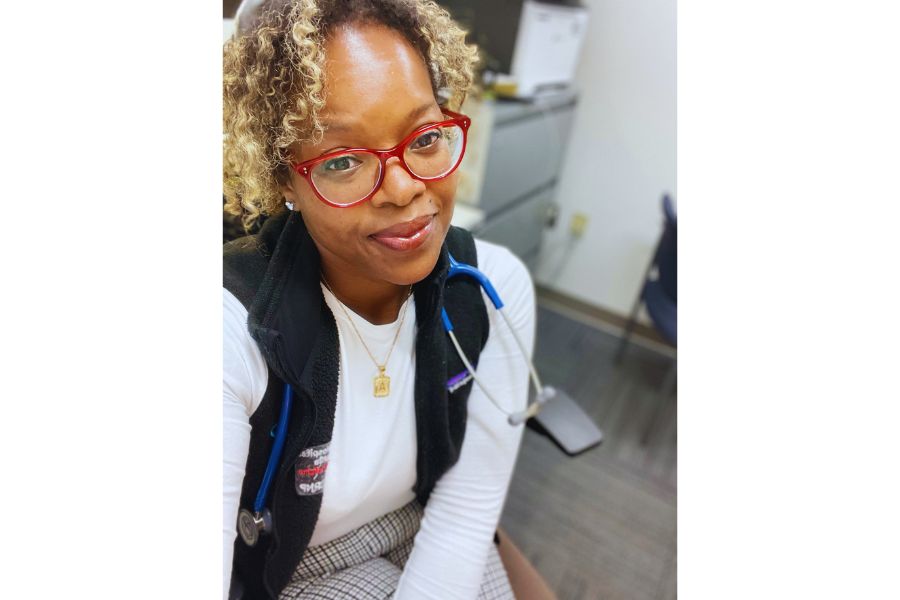
Amy Anne Felix is a nurse practitioner and the creator of The Nurse Sabbatical, a thought-leadership platform exploring nursing culture, rest, identity, and life redesign. Through storytelling and systems reflection, she examines how mid-career nurse practitioners can build aligned, sustainable careers without abandoning their identity.