For generations, the story was simple: you work hard for 40 years, often at the same company, and then you finally get to rest when you retire. Today, the story has shifted. People bounce from job to job, climb ladders, or juggle multiple careers. But the expectation hasn’t changed: rest comes later, after you’ve proven yourself.
But what if later never comes? And what if the cost of waiting is burnout, illness, or a life that passes by too quickly?
Somewhere along the way, rest became the enemy. Hustle culture told us that exhaustion equals accomplishment. Phrases like “I’ll sleep when I’m dead” or “rest is laziness” are so common we hardly notice them anymore.
But here’s the truth I’ve learned: rest isn’t easy, not because it’s unimportant, but because we’ve been taught to resist it.
The Messages We Inherit
Growing up, I was lucky to have a mom who believed in living life. She took us on road trips and vacations, teaching us to enjoy the journey and not just the work. I also come from a culture that celebrates life, food, music, community, and joy.
But as I got older, those messages were drowned out by a different one: work harder. Climb higher. Be more ambitious.
In corporate America and especially in healthcare, the expectation is constant availability. If you’re not hustling, producing, or showing up for everyone else, then you’re “falling behind.” The guilt was real. If I wasn’t doing something, I felt I should be.
So what did I do? What so many of us do: I filled my days with small fixes to push through. A cup of tea in the morning. A Starbucks run in the afternoon. Caffeine to fuel my body even when it was begging me to stop.
The Coping That Isn’t Rest
I love tea. Part of it is cultural, I grew up with it, and it feels like comfort. But I also used it to push myself through.
The truth is, most of us do. The coffee, caffeinated sodas, expresso beans is all to help us to keep moving beyond what the human body naturally does. We use late night scrolling to help us “rest” but that actually keeps our brains running. We confuse numbing with nourishing.
Confession: I used to pride myself on hustling. Back-to-back 12s, staying at work to complete one more thing, running on fumes. I thought that was strength. Now I know, it was depletion.
When I first started my sabbatical, people asked me what I was going to do. My answer was simple: sleep and rest.
And I meant it. I had no calendar. No packed schedule. Besides finishing a small consulting project, I slept, I watched TV, I did nothing. For someone like me, who had been on autopilot for years, that was radical. And honestly, it was mind-blowing.
Why Rest Feels So Hard
Here’s what I realized about myself, and what I’ve heard from so many others:
1. I don’t rest because I haven’t been productive enough.
If I didn’t “earn it,” I told myself I couldn’t stop.
2. I don’t rest because of FOMO.
There’s always another event, another opportunity, another thing to do.
3. I don’t rest because I think one more thing, even when I’m tired, will make the difference.
I believed pushing through meant progress.
4. I don’t rest because I’m chasing a dream.
If the dream doesn’t come true, I feared people would think I didn’t work hard enough.
5. I don’t rest because I want to be there for everyone including family, friends, my team.
Saying yes to everyone else left nothing for me.
6. I don’t rest because exhaustion has become normal.
Three 12-hour shifts and picking up overtime shifts? That’s “just nursing.” A 9-5 that stretches into nights and weekends? That’s “just corporate.” But is it?
What Happens When You Finally Do
When I finally stopped — really stopped — during my sabbatical, I learned something shocking: the world didn’t fall apart without me.
Instead, I started to come back to myself. Rest gave me clarity. It gave me creativity. It gave me permission to build a life where I don’t need to recover from the grind every week.
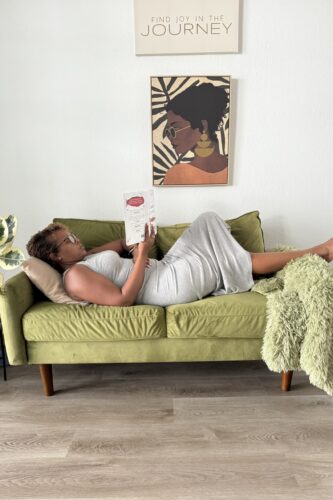
And today? One of my favorite tools for rest is a simple one: the mid-afternoon nap. Just 30 minutes to reset my brain, stop pushing, and breathe. Those short naps are no longer a guilty pleasure, they’re a strategy. And I swear, they give me more clarity than any cup of coffee ever has. I don’t get them every day, but I cherish them when they occur.
Tricia Hersey, author of Rest Is Resistance, says, “Rest is not lazy. Rest is a form of resistance.” And she’s right. Rest is how we push back against the culture that tells us our worth is only in what we produce.
So yes, rest feels hard but that’s exactly why it’s worth practicing.
Closing Thought
Rest is not about doing nothing. It’s about remembering that you are not nothing without constant doing.
If you find yourself avoiding rest because of guilt, FOMO, or fear — I’ve been there. But I promise you, when you do pause, you’ll find clarity, energy, and a reminder of who you are beyond the hustle.
Take care, take breaks.